
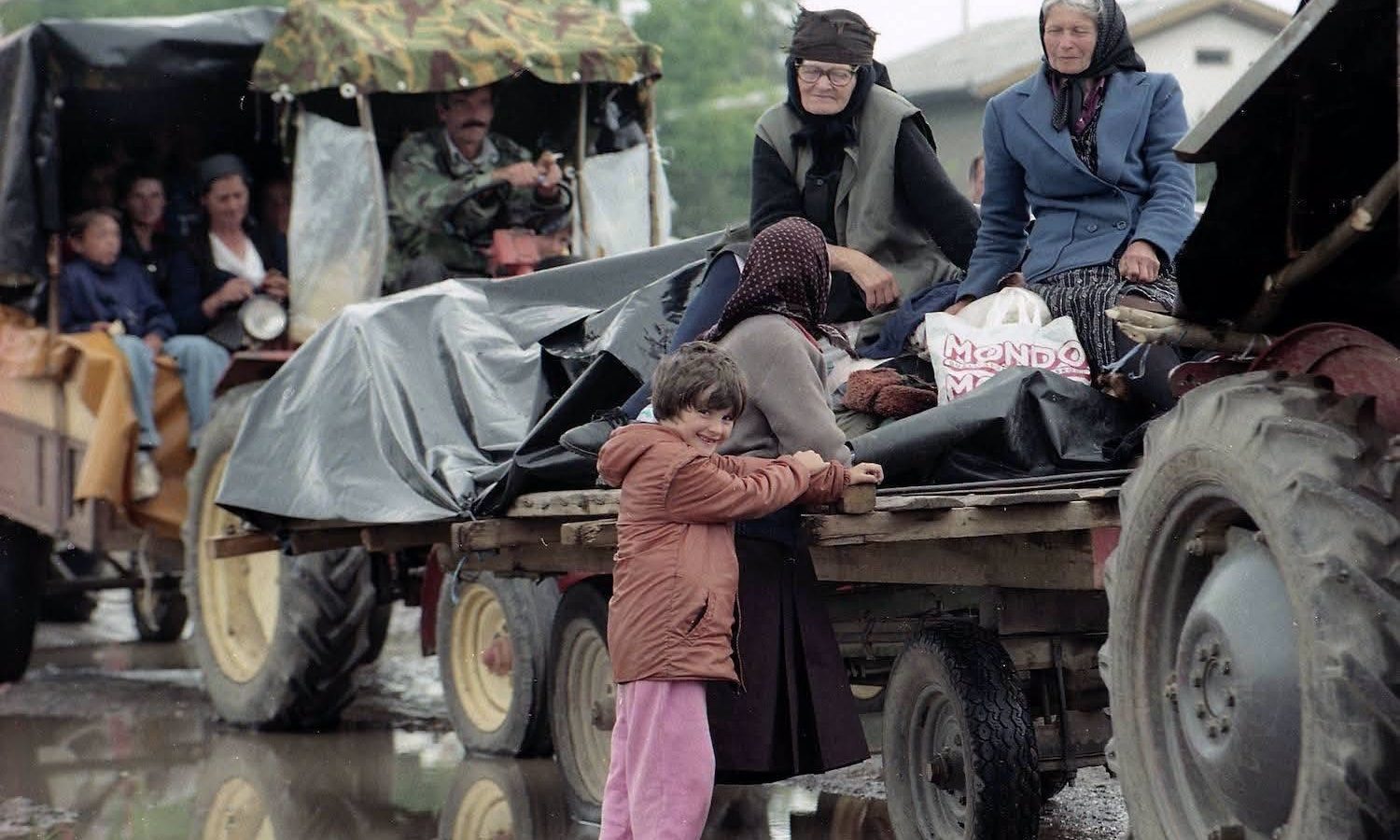
A military operation by the Croatian Army (4-8 August 1995). 200,000-250,000 Serbs expelled, 1,500-2,500 civilians killed, 22,000 houses burned. The Hague Tribunal: the systematic destruction of Serb life. Impunity - the commanders acquitted.
Operation Storm was a four-day military operation by the Croatian Army against the Republic of Serbian Krajina (RSK) in August 1995. The result: one of the largest refugee waves in Europe after the Second World War.
Context - the Republic of Serbian Krajina (RSK)
What was the RSK?
- A self-proclaimed Serbian republic in Croatia (1991-1995)
- Territory: Western Slavonia, Lika, Banija, Kordun, Dalmatia
- Population: ~300,000 Serbs (mostly civilians)
- Reason for its creation: Fear of a repeat of the NDH (Jasenovac)
- Status: Internationally unrecognised
- 1991: The break-up of Yugoslavia, war in Croatia
- 1992: Ceasefire (Sarajevo Agreement) - RSK under UN protection
- 1992-1995: A zone under UN protection (UNPA - UN Protected Areas)
- 15,000 UN soldiers (UNPROFOR) protected the zone
Preparation of Storm - Croatia was not alone
American support
MPRI (Military Professional Resources Inc.):
- An American private military company
- Retired American generals
- Trained the Croatian Army 1994-1995
- The operation plan - American military doctrine
- The US provided satellite images of RSK positions
- Communications interception
- Coordination of the attack
- The US blocked the UN Security Council - it did not condemn the attack
- Ambassador Richard Holbrooke - support for Tuđman
Military superiority
The Croatian Army (HV):
- 200,000 soldiers (the best trained and armed in the region)
- Tanks, artillery, aircraft
- American training
- 30,000 soldiers (mostly old men and reservists)
- Outdated weaponry
- Poor training
- No support - Serbia did not help (UN embargo)
Operation Storm - Chronology
4 August 1995 (Friday) - Day 1
05:00 - Start of the attack:
- Artillery: Massive shelling of Serbian towns
- Aviation: Bombing of civilian targets
- Ground forces: Attack from all sides
- Knin (the capital of the RSK) - intense shelling
- Benkovac
- Obrovac
- Gračac
- Donji Lapac
- Conventional shells
- Cluster bombs (prohibited by international law - they target civilians)
- Orkan rockets - an indiscriminate weapon
5 August - Day 2
The fall of Knin:
- The Croatian Army enters Knin
- The RSK army withdraws (defence impossible)
- The civilian population FLEES EN MASSE
- Tens of thousands of civilians set off towards Bosnia (Banja Luka)
- Tractors, buses, cars, on foot
- Chaotic flight - fear of a massacre
- Memory of Jasenovac (1941-1945)
- Fear of revenge
- The RSK authorities called for an evacuation (or did they force it?)
- The Croatian Army did not guarantee safety
6-7 August - Days 3-4
The Croatian Army takes the entire territory of the RSK:
- Benkovac, Obrovac, Gračac, Donji Lapac - fallen
- The SVK withdrew completely into Bosnia
- Mass flight of civilians
- First wave (4-7 August): ~150,000 Serbs fled
- Second wave (the following weeks): another 50,000 Serbs expelled/fled
- TOTAL: 200,000-250,000 people
8 August - End of the military operation
The military part completed:
- The RSK ceased to exist
- Croatia took 10,500 km² of territory
- 200,000+ Serbs expelled
- The Croatian Army and police begin "cleansing the terrain"
- Killing of the remaining civilians (old people who could not flee)
- Burning of Serbian houses
- Looting of property
Violence after Storm - "The systematic destruction of Serb life"
August-September 1995
ICTY finding: "There was a systematic pattern of killing, house-burning and looting. This was not sporadic violence, but an organised campaign." Methods:
- Killings: The remaining civilians (mostly old people) killed
- Executions: Prisoners shot without trial
- Burning of houses: Systematic - house by house
- Looting: Livestock, equipment, cars - everything carried off
- Mining: Fields, wells, houses mined
Documented killings - examples
Varivode (28 September 1995):
- A village near Knin
- 9 old people killed (61-85 years old)
- The Croatian military police entered the village
- They called on the Serbs to surrender - they guaranteed safety
- Then they SHOT them
- The bodies were burned to destroy the evidence
- Jovan Berić (85 years old)
- Dmitar Berić (62 years old)
- Ilija Berić (70 years old)
- Sava Berić (62 years old)
- Petar Damjanović (76 years old)
- Sava Milić (67 years old)
- Jovan Rašeta (72 years old)
- Đuro Sarap (61 years old)
- Nikola Vujnović (64 years old)
Statistics of the violence
UN reports (1995-1996):
- Killings: 1,500-2,500 civilians (estimate - many bodies were never found)
- Missing: 2,500+ (International Red Cross list)
- Burned houses: 22,000 (documented by satellite images)
- Churches destroyed: 280+ Orthodox churches
- 1,191 documented names of those killed (with biographies)
- Of those: 670 civilians, 521 military personnel (many prisoners)
- Oldest victim: 99 years old
- Youngest victim: 3 months old
The UN present - but passive
UNPROFOR - "Protected" Areas?
UN mandate:
- Protection of the civilian population
- Demilitarisation of the zone
- Maintenance of peace
- NOTHING
- 15,000 UN soldiers WATCHED as Croatia attacked
- They did not try to stop the attack
- They did not protect the civilians
- The mandate did not permit "offensive action"
- Fears of a conflict with the Croatian Army
- Political will - the West supported Croatia
If you have 15,000 soldiers and cannot protect the civilians - why are you there? This is the same failure as Srebrenica (a month before Storm).
International reaction - support for Croatia
The US
Richard Holbrooke (American ambassador): "Storm changed the military situation in the Balkans. It was a positive development." US politics:
- Blocked condemnation in the UN Security Council
- Ignored reports of crimes
- Continued support for Croatia
The EU
- Moderate criticism
- But no sanctions were imposed
- Croatia later became a member of the EU (2013)
Russia and Serbia
- Condemned Storm
- Called for an investigation
- Blocked at the UN by the US
The Hague Tribunal (ICTY) - Justice?
The accused
Ante Gotovina - general, commander of Storm Mladen Markač - commander of the special police Ivan Čermak - commander of the Knin district Charges:
- Crimes against humanity
- Violations of the laws and customs of war
- Deportation
- Persecution
- Looting
- Destruction
The verdict - SCANDAL
2011 - First instance:
- Gotovina and Markač CONVICTED, sentenced to 24 and 18 years
- Čermak acquitted
- ALL THREE ACQUITTED
- Reason: "No evidence of a joint criminal enterprise"
- Croatia: Celebration, Gotovina a national hero
- Serbia: Shock, disappointment
- The victims: Devastated
- Judge Fausto Pocar (dissenting opinion): "The majority erred. The evidence is clear - systematic crimes did take place."
Number of victims - different sources
UN reports:
- 1,500-2,500 dead
- 2,500+ missing
- 1,191 documented names
- But many have still not been found
- Confirms "thousands of victims"
- Systematic violence
- Claims "a few hundred"
- Denies the systematic character
- Claims these were "isolated incidents"
Ethnic cleansing - the definition is met
The UN definition of ethnic cleansing: "A systematic policy of expelling or killing persons of a particular ethnic group from a particular territory." Storm meets all the criteria:
- ✅ Systematic - organised from the top (ICTY evidence)
- ✅ Expulsion - 200,000-250,000 Serbs
- ✅ Killing - 1,500-2,500 dead
- ✅ A particular ethnic group - Serbs
- ✅ A particular territory - Krajina
- The Hague Tribunal did NOT designate Storm as "ethnic cleansing"
- The Western powers did NOT condemn it
- Croatia DENIES it
The situation today (2025)
Return?
Of the 200,000-250,000 expelled:
- Returned: ~50,000 (mostly old people)
- Did not return: ~150,000-200,000
- Houses burned - nowhere to return to
- Fear of violence
- Discrimination in Croatia
- A new life in Serbia/Bosnia
Justice?
- Gotovina, Markač, Čermak - acquitted
- Domestic courts in Croatia - NO ONE CONVICTED for crimes in Storm
- Impunity - complete
Remembrance
In Croatia:
- 5 August - Day of Thanksgiving (a national holiday)
- Storm is celebrated as a "liberation operation"
- Gotovina - a national hero
- The victims - minimised or denied
- 5 August - Day of Remembrance for the victims of Storm
- Commemorations
- Demands for justice
Conclusion
Operation Storm was:
- The largest military operation in Europe after WWII
- The largest ethnic cleansing in Europe after WWII (200,000-250,000 expelled)
- Systematic violence - 1,500-2,500 dead, 22,000 houses burned
- A failure of the UN - 15,000 soldiers did not protect the civilians
- Support of the West - the US and the EU supported Croatia
- Impunity - no one punished
- Forgotten - while Srebrenica is remembered, Storm is forgotten
"Srebrenica is a genocide - justly condemned. Storm is ethnic cleansing - hushed up and forgotten. Justice is selective." - Carla del Ponte, former prosecutor of the Hague Tribunal
Eternal glory to the victims. Eternal remembrance. 🕊️
Sources
Human Rights Watch - 'Croatia: Impunity for Abuses Committed During Operation Storm and the Denial of the Right of Refugees to Return to the Krajina' (1996)
UN Security Council - S/1995/666, S/1995/779, S/1996/820
UN Human Rights Council - Report on human rights situation in Croatia
Amnesty International - 'Croatia: Operation Storm - still no justice ten years on' (2005)
Veritas - Dokumentaciono-informacioni centar - Database of victims
International Committee of the Red Cross - Missing Persons List
OSCE Mission to Croatia - Human Rights Reports
US State Department - Country Reports on Human Rights Practices (1995-1996)
European Parliament - Resolutions on Croatia
Location
Republika Srpska Krajina (cela teritorija)

Comments (0)
Be the first to leave a comment.